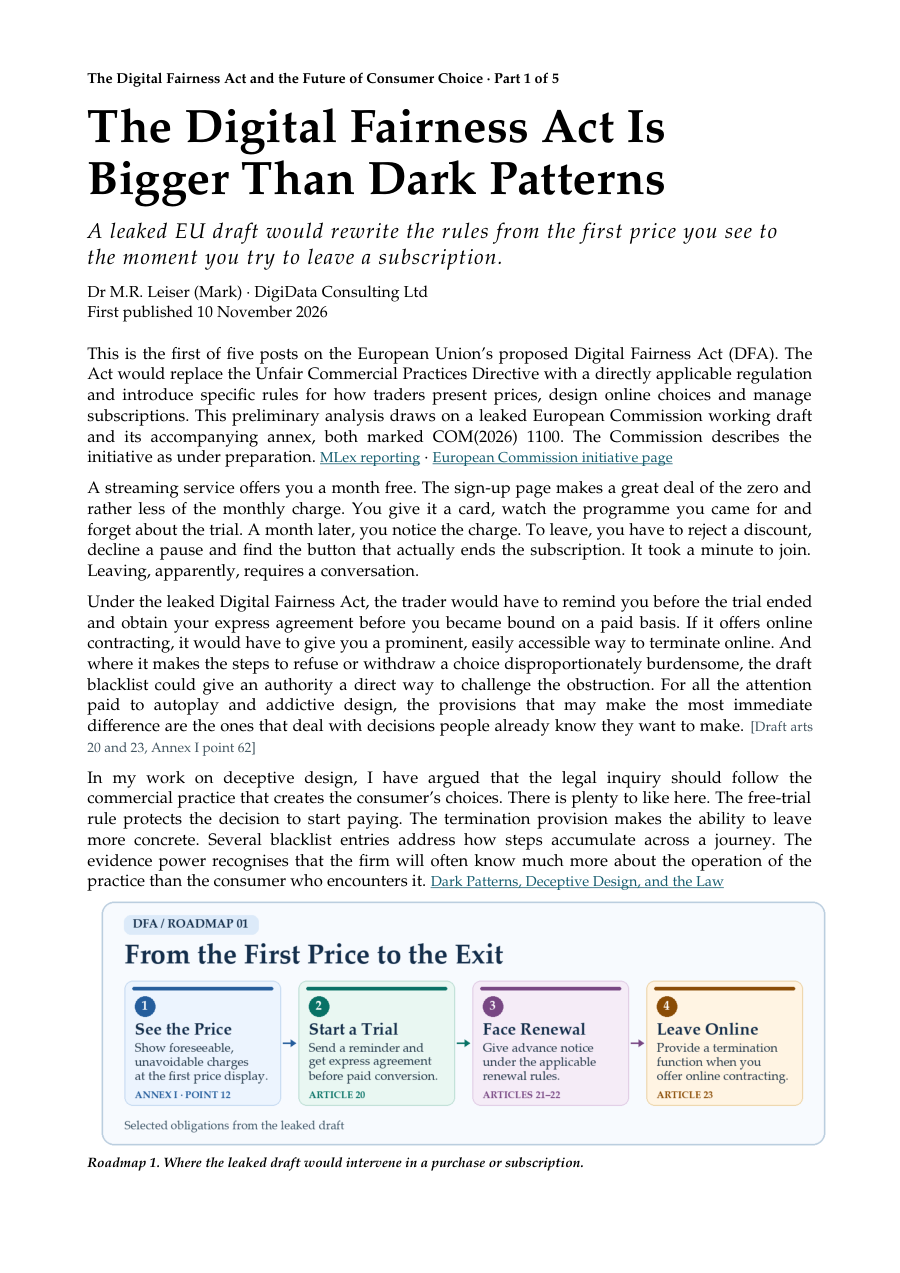
The Digital Fairness Act Is Bigger Than Dark Patterns
The proposed Digital Fairness Act would reshape price presentation, subscription contracts, online choice and enforcement. Part 1 maps the leaked draft’s principal rules.

The proposed Digital Fairness Act, from the legal tests for dark patterns to personalised consumer journeys and effective enforcement.
The Digital Fairness Act would recast EU consumer law for online commercial practices. This collection follows the proposal from price presentation and subscriptions to personalised cancellation routes, consumer controls and access to evidence. The five-part series sets out the legal tests and proposed amendments; a further essay examines Article 17 and the evidence behind its controls for addictive design.
These essays record the analysis on the publication dates shown. Each identifies the leaked working text it examines; article and recital numbering differs between versions.
Five articles in sequence, followed by the Article 17 companion essay.
The proposed Digital Fairness Act would reshape price presentation, subscription contracts, online choice and enforcement. Part 1 maps the leaked draft’s principal rules.
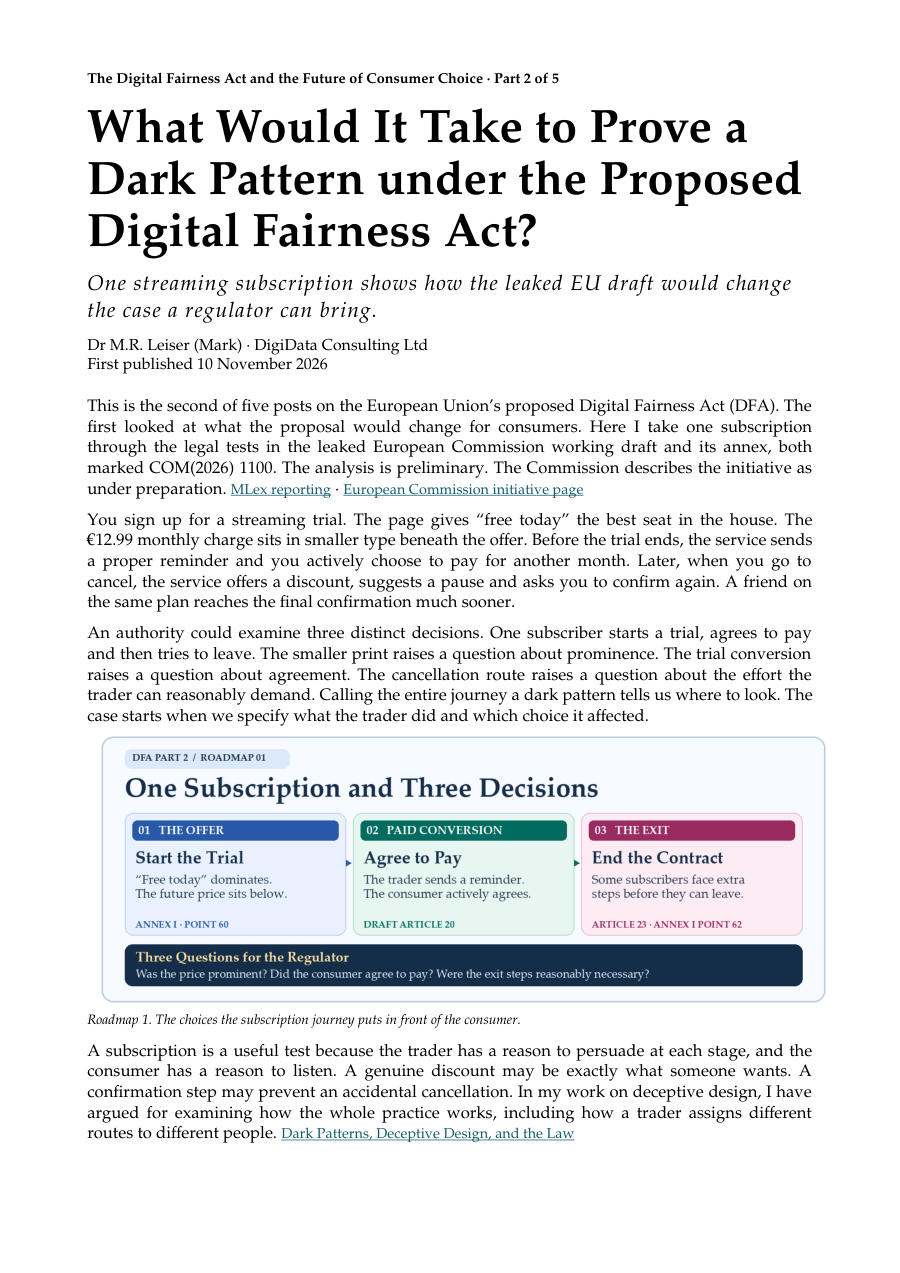
A streaming subscription tests the evidence and legal elements an authority would need under Annex I, Article 10 and the general unfair commercial practices rules.
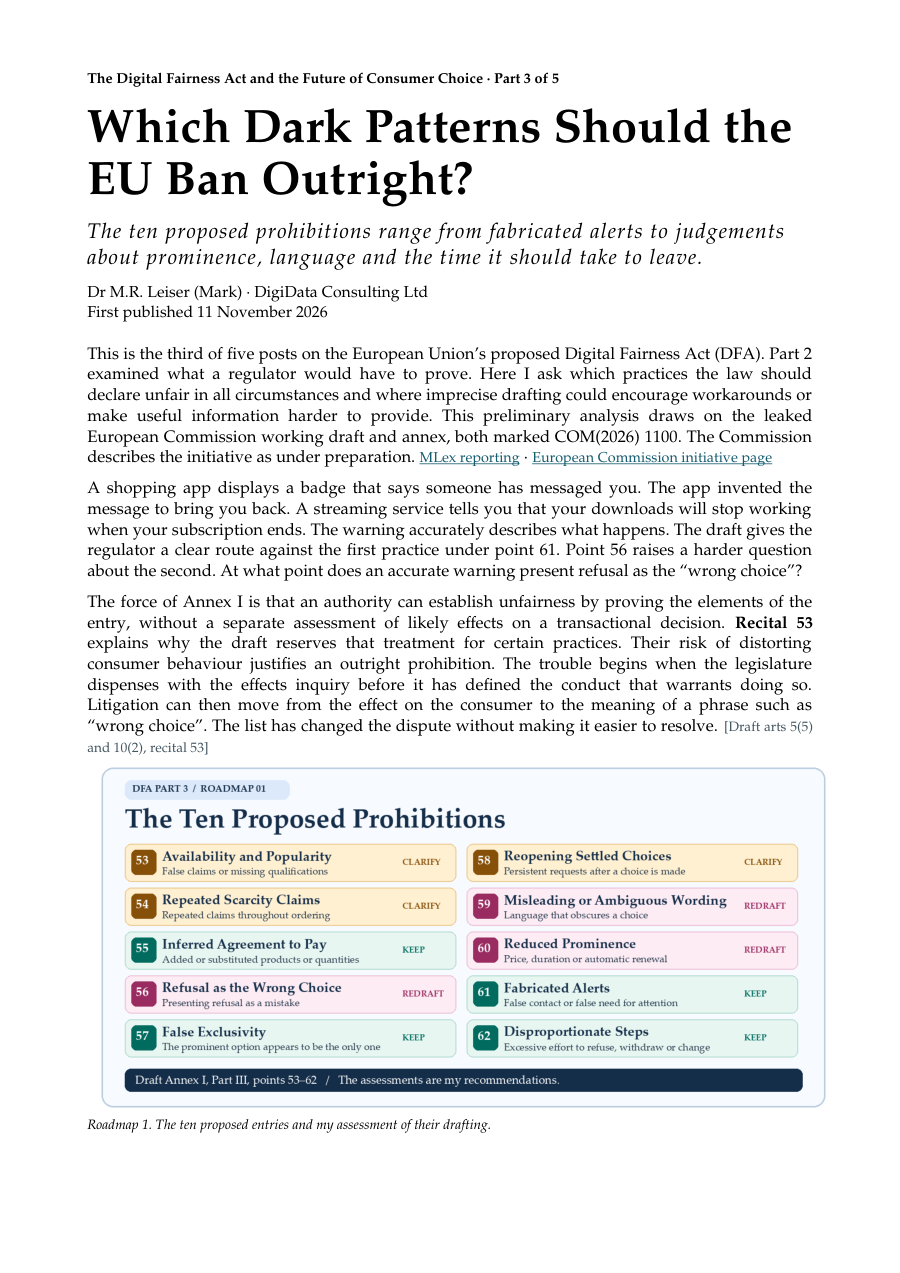
An assessment of the draft’s ten dark-pattern prohibitions: which entries justify an outright ban, which need clarification and which require narrower drafting.
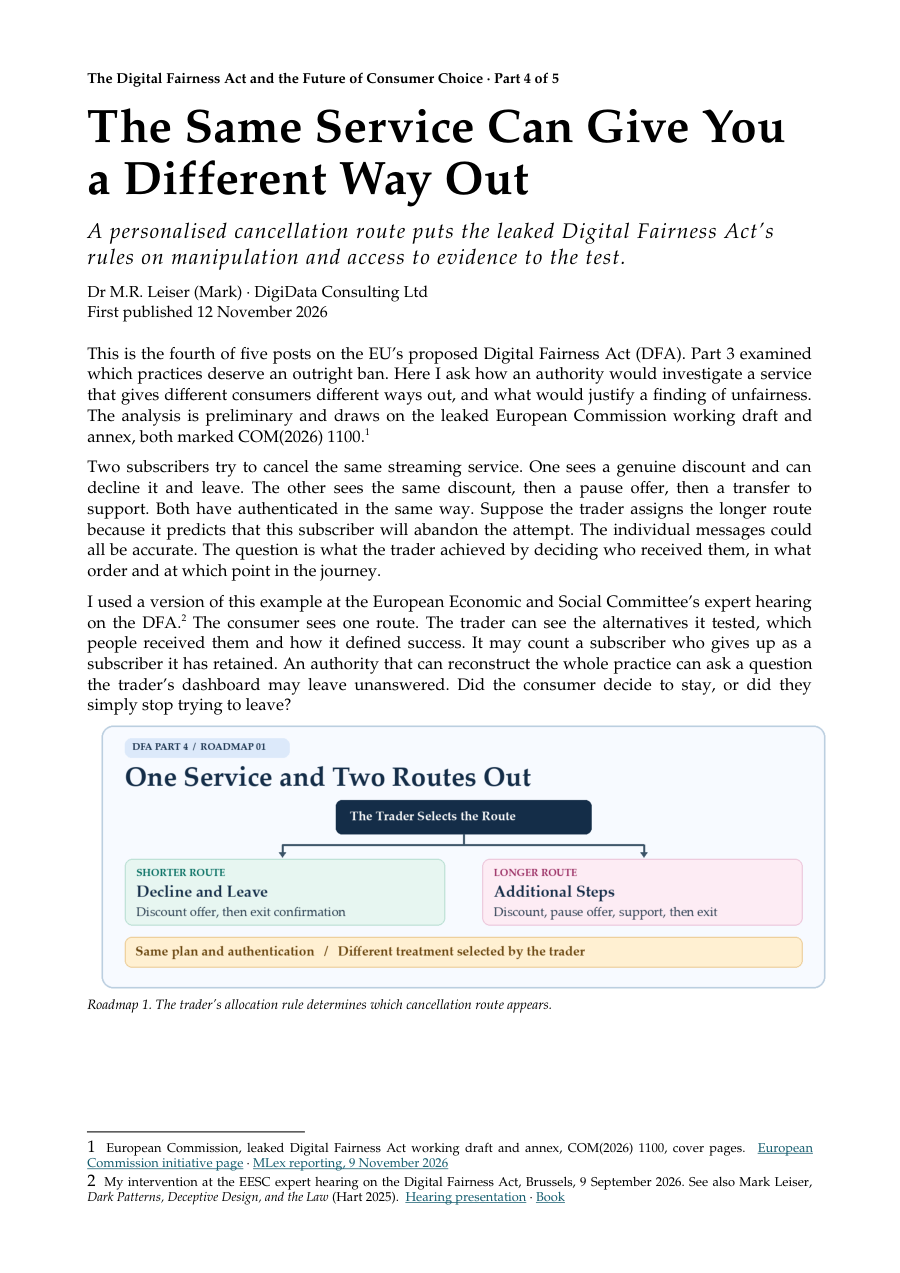
Personalised cancellation routes expose the relationship between allocation rules, consumer benchmarks and the evidence needed to prove manipulation.
Four proposed amendments address adaptive commercial practices, the boundaries of the blacklist, preservation of evidence and cooperation between regulators.
A close examination of Article 17, the Commission’s impact assessment and the evidence behind consumer controls for features that encourage compulsive or excessive use.
Dark Patterns Are Only the Surface brings together the slides and prepared remarks from the European Economic and Social Committee hearing on 9 September 2026.
The Digital Fairness Act: What Europe Must Get Right provides the accompanying lecture series.