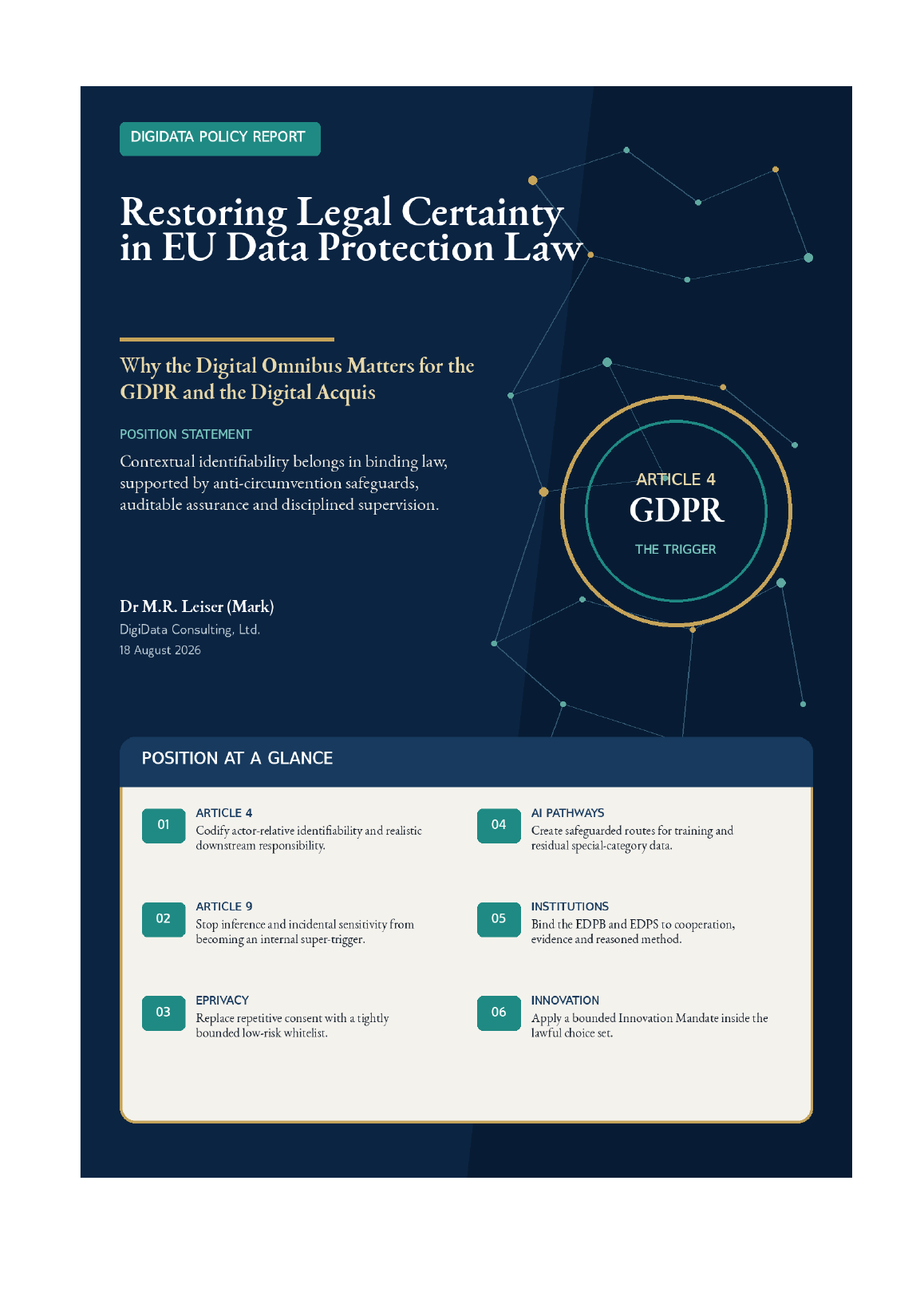
Restoring Legal Certainty in EU Data Protection Law
The final DigiData report on contextual identifiability, anonymisation assurance, scientific research, AI development and supervisory governance in the Digital Omnibus.

DigiData’s research section brings together public reports, books, regulatory submissions and external research infrastructure. Browse the latest featured work, the research archive and the Deceptive Design Enforcement Database.
Recent reports and expert contributions on data protection, digital fairness and regulatory policy.
The final DigiData report on contextual identifiability, anonymisation assurance, scientific research, AI development and supervisory governance in the Digital Omnibus.
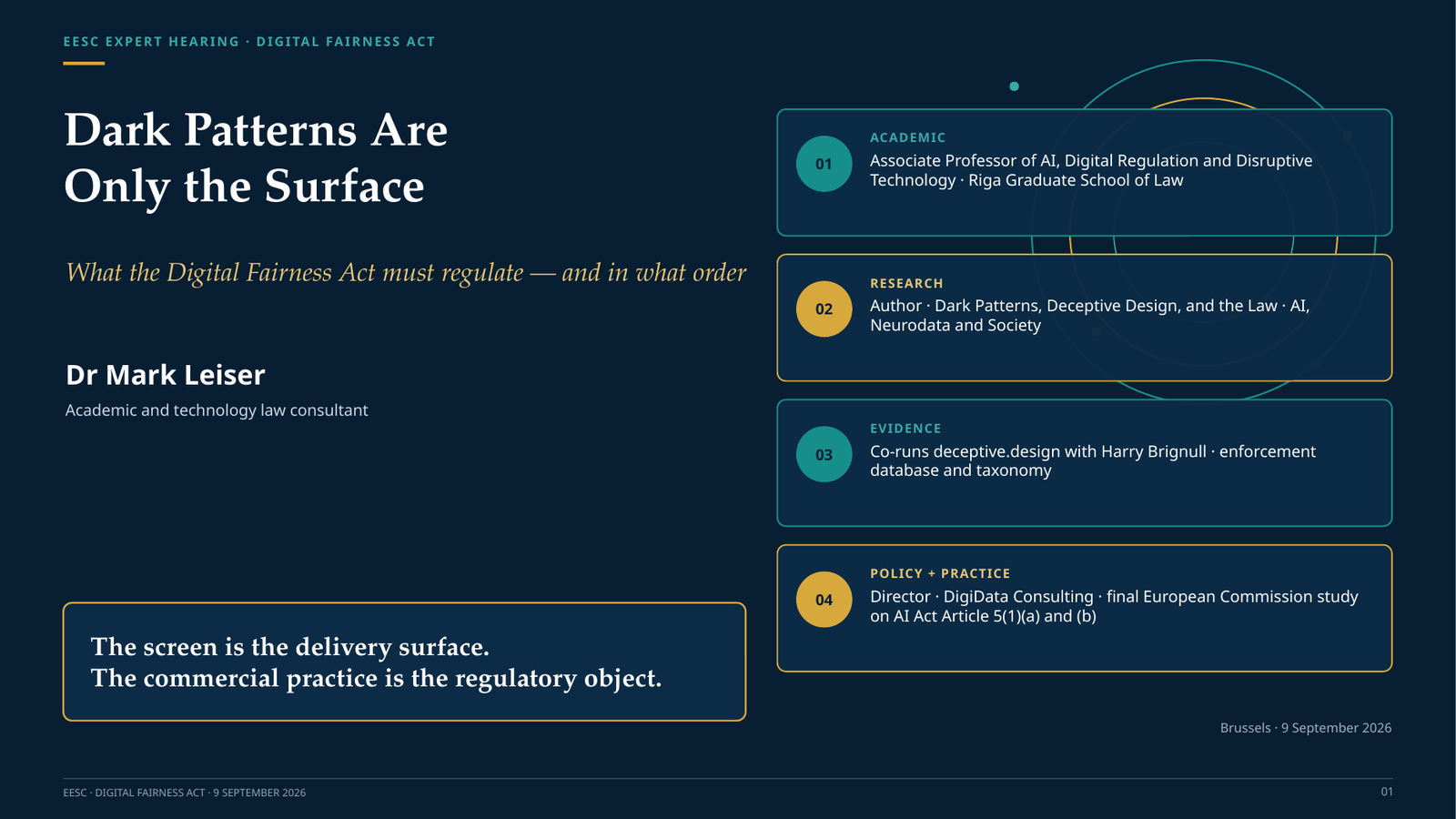
Slides, prepared remarks and a companion lecture from the European Economic and Social Committee hearing on the Digital Fairness Act, commercial practices and the evidence needed for enforcement.
A searchable record of regulatory action and litigation concerning deceptive patterns in digital services.
The database supports comparative analysis of how consumer protection, data protection, competition and related legal regimes respond to manipulative interface and system design. It brings together enforcement materials across jurisdictions and organises them according to the deceptive practices identified in each action.
The enforcement materials draw on the Leiser, Santos and Doshi Database, providing a practical evidence base for researchers, regulators, practitioners and organisations assessing the legal treatment of deceptive design. The resource is hosted by deceptive.design and opens as an external site.
The complete public collection includes commissioned studies, submissions, policy papers and earlier academic reports. Work also records the engagements and research projects behind these publications.
Slides, prepared remarks and a companion lecture from the European Economic and Social Committee hearing on the Digital Fairness Act, commercial practices and the evidence needed for enforcement.
The Digital Omnibus, contextual identifiability and a reliable assurance route for privacy enhancing technologies.
 Published
A comprehensive analysis of subliminal, purposefully manipulative, deceptive and vulnerability-exploitative AI practices, including constitutive elements, enforcement challenges, use cases and interaction with the wider EU digital acquis.
 Published
A 155-page analysis of manipulative interfaces and system architecture, personalised influence, gamification, children’s vulnerabilities and the adequacy of the GDPR, DSA, UCPD and AI Act.
 Published
A submission on Article 6(11) DMA that preserves anonymisation as the legal condition for sharing personal search data, proposes tiered access modalities and introduces the AUIA.
 Published
A proposal for a binding duty of evidence and public reason-giving when digital regulators choose among materially different lawful routes affecting rights, legal certainty, investment and scale.
 Published
An analysis of collective redress, Article 82 GDPR, procedural fragmentation, forum selection, automation and the need to keep harm, procedure and remedy tightly coupled.
 Published
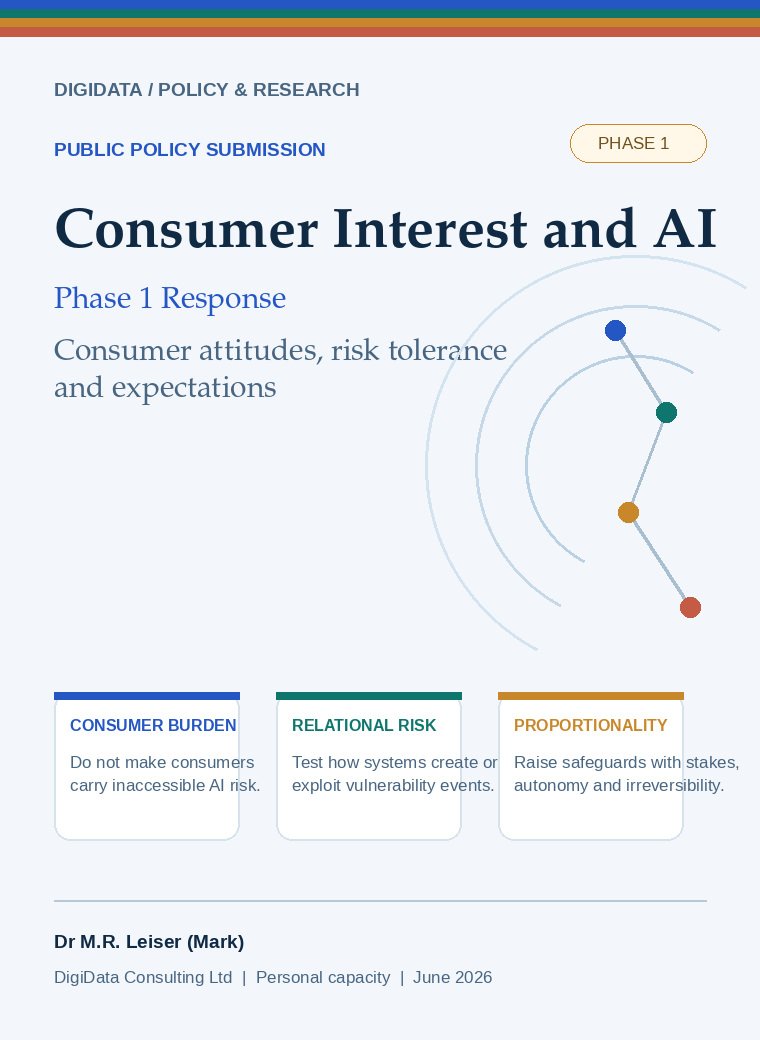
A proportionate, architecture-aware account of consumer AI risk. It argues against placing the primary burden on consumers, treats vulnerability as relational and distinguishes beneficial assistance from exploitative optimisation.
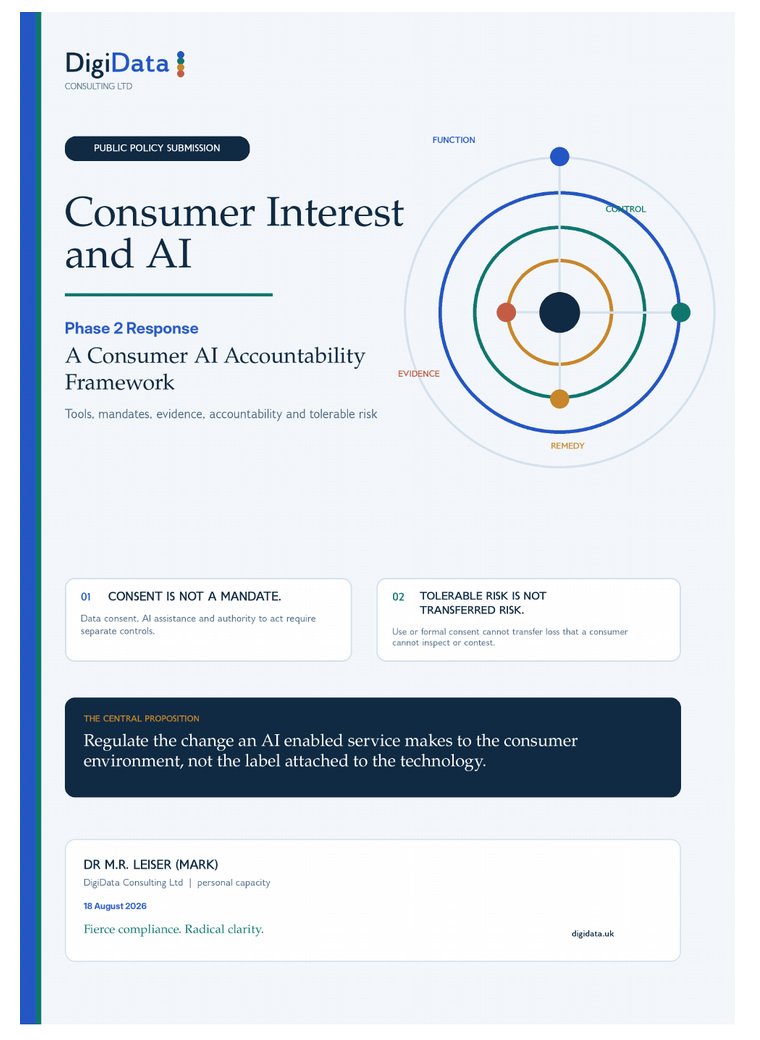 Published
An operational framework for adaptive and agentic consumer services, combining a five-tier functional risk ladder with mandates, action receipts, prohibited optimisation objectives, vulnerability-event controls, rights-friction parity, evidence packs, redress by design and earned safe harbours.
 Published
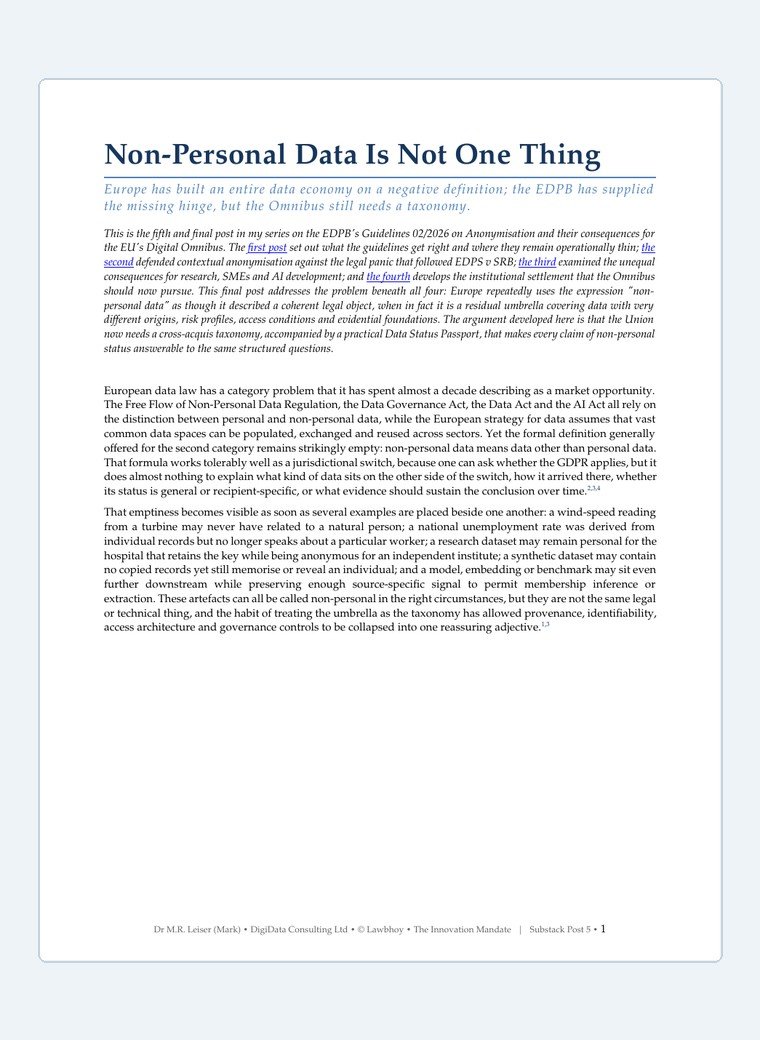
A cross-acquis taxonomy that separates legal status from route, scope, artefact form, circulation and assurance instead of treating non-personal data as one coherent object.
 Published
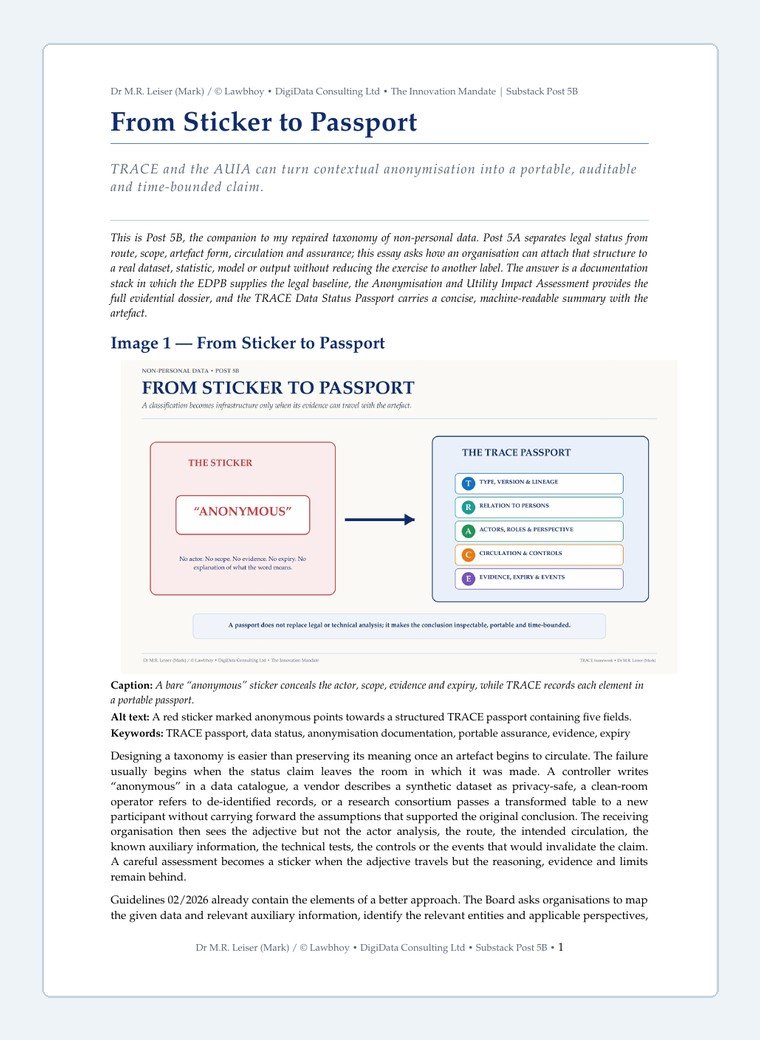
A documentation stack in which the legal baseline, complete assessment dossier and portable data-status claim remain separate, reviewable and time-bounded.
 Published
An institutional case for cooperative digital administration, clearer responsibility, procedural discipline, auditable separation and an enforceable duty of inter-regulatory cooperation.
 Published
A reconstruction of proportionality as a discipline of justified interference and rights-sensitive technological architecture across EU law, the GDPR and the AI Act.
 Published
A rights-based critique of addiction-centred policy narratives and a case for evidence-led, function-specific regulation of manipulation, exploitation and genuine harm.
 Published
A multidisciplinary analysis of the EU proposal on online child sexual abuse, addressing general monitoring, proportionality, private communications, adolescent sexual exploration, voluntary detection and institutional safeguards.
 Published
A technology-focused assessment of detection tools and end-to-end encryption under the EU proposal, covering hashing, image and text classifiers, on-device techniques, secure enclaves, repurposing risks and legal safeguards.
 Published
An earlier policy report on consumer and regulatory harms associated with virtual currencies and the need for legal certainty in technically complex markets.
The final DigiData report on contextual identifiability, anonymisation assurance, scientific research, AI development and supervisory governance in the Digital Omnibus.
Publisher pages provide the authoritative bibliographic and purchasing records.

AI’s Hidden Influence on Our Digital Experience
A full-spectrum account of manipulation from visible interface tactics to personalised system architecture and AI-powered influence.
View publisher page
A multi-author assessment of the GDPR’s institutions, doctrine and enforcement
A critical examination of the GDPR’s legal architecture, enforcement practice and wider political and institutional consequences.
View publisher page
Law at the Edge of Cognition
An examination of NeuroAI, predictive cognition, mental privacy and the legal limits surrounding brain-derived and inferred data.
View publisher pageDigiData develops independent studies, expert evidence, policy papers, regulatory submissions and use-case analysis for institutions and organisations facing difficult digital-regulation questions.