
Consumer Interest and AI, Phase 1 Response: Consumer Attitudes, Risk Tolerance and Expectations
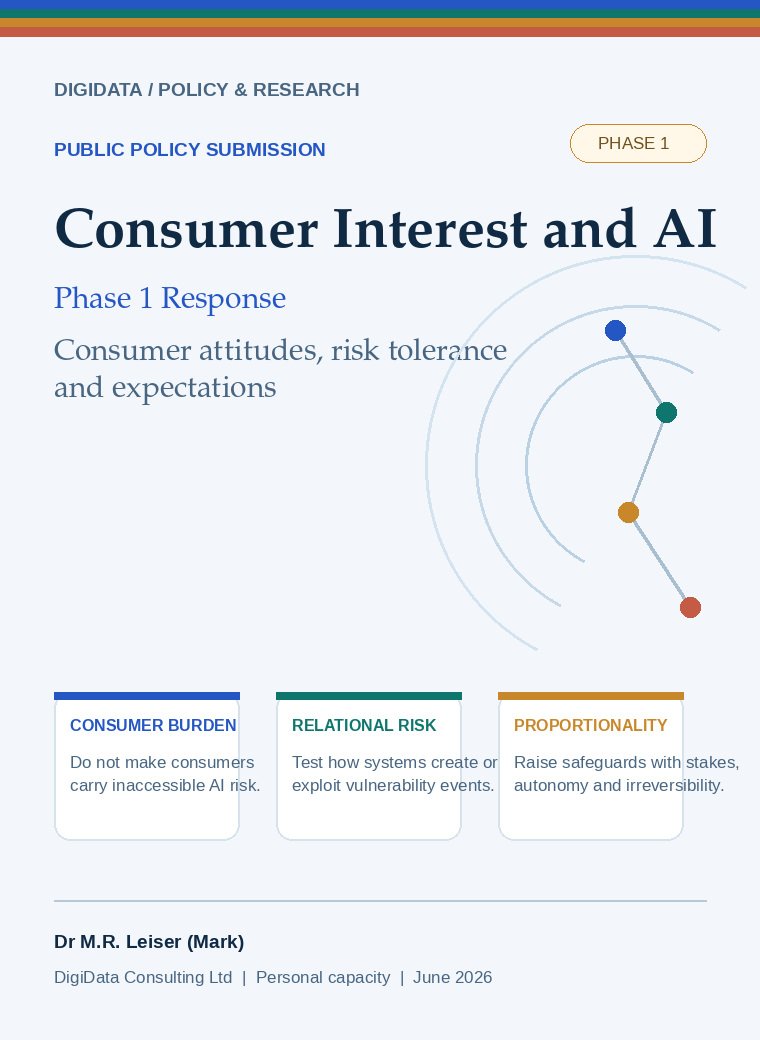
A proportionate, architecture-aware account of consumer AI risk. It argues against placing the primary burden on consumers, treats vulnerability as relational and distinguishes beneficial assistance from exploitative optimisation.
What the report examines
A proportionate, architecture-aware account of consumer AI risk. It argues against placing the primary burden on consumers, treats vulnerability as relational and distinguishes beneficial assistance from exploitative optimisation.
- Addresses consumer attitudes, risk tolerance, expectations, transparency, literacy, trust, quality, accountability and redress.
- Rejects the assumption that consumers can manage complex generative and agentic AI risks through disclosure, consent or general AI literacy alone.
- Treats vulnerability as relational and event-based, including fatigue, urgency, distress, dependency, opacity and personalised pressure.
- Distinguishes beneficial AI from exploitative optimisation and proposes a risk grammar based on stakes, autonomy, opacity, personalisation, vulnerability exposure, reversibility and redress.
From legal boundary to operational consequence.
The report sits within DigiData’s wider practice of connecting legal interpretation with use cases, institutional incentives, evidence and implementable choices. The downloadable PDF remains the authoritative publication; this page provides a concise, indexable summary and clear route to the source.
Need to apply this analysis to a live decision?
DigiData can provide independent research, expert evidence, regulatory strategy, training or a structured briefing grounded in the relevant system and institutional context.