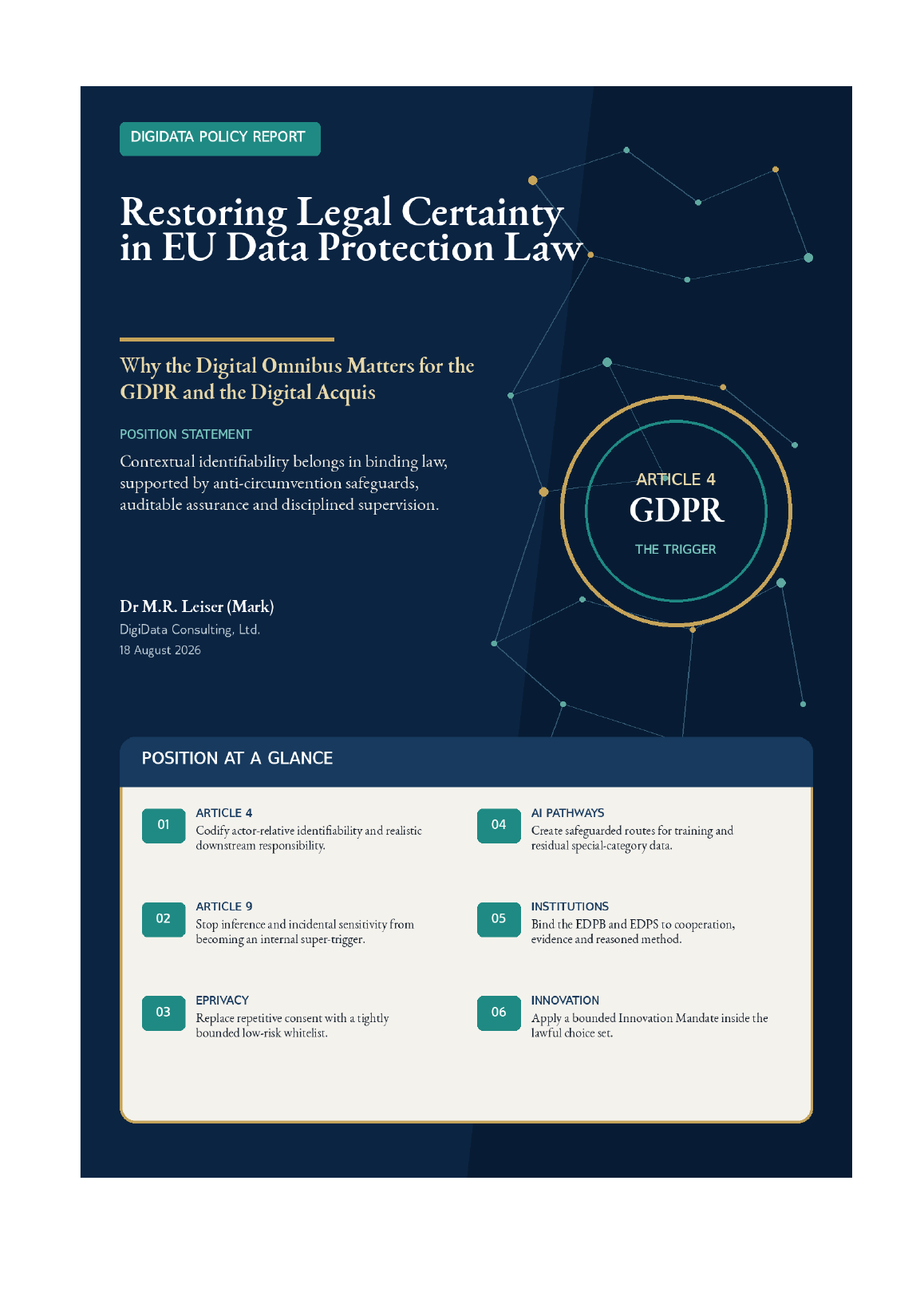
Restoring Legal Certainty in EU Data Protection Law
The final DigiData report on contextual identifiability, anonymisation assurance, scientific research, AI development and supervisory governance in the Digital Omnibus.

DigiData helps technology companies, institutions and regulators turn complex digital rules into defensible decisions, rigorous evidence and workable implementation.
Led by Dr M.R. Leiser and strengthened by a purpose-built international network of legal, technical, behavioural, economic and policy experts when a project demands more than one discipline.
The DigiData method
A quick overview of the service areas, selected engagements and public work currently featured on the site.
Recent reports and expert contributions on data protection, digital fairness and regulatory policy.
The final DigiData report on contextual identifiability, anonymisation assurance, scientific research, AI development and supervisory governance in the Digital Omnibus.
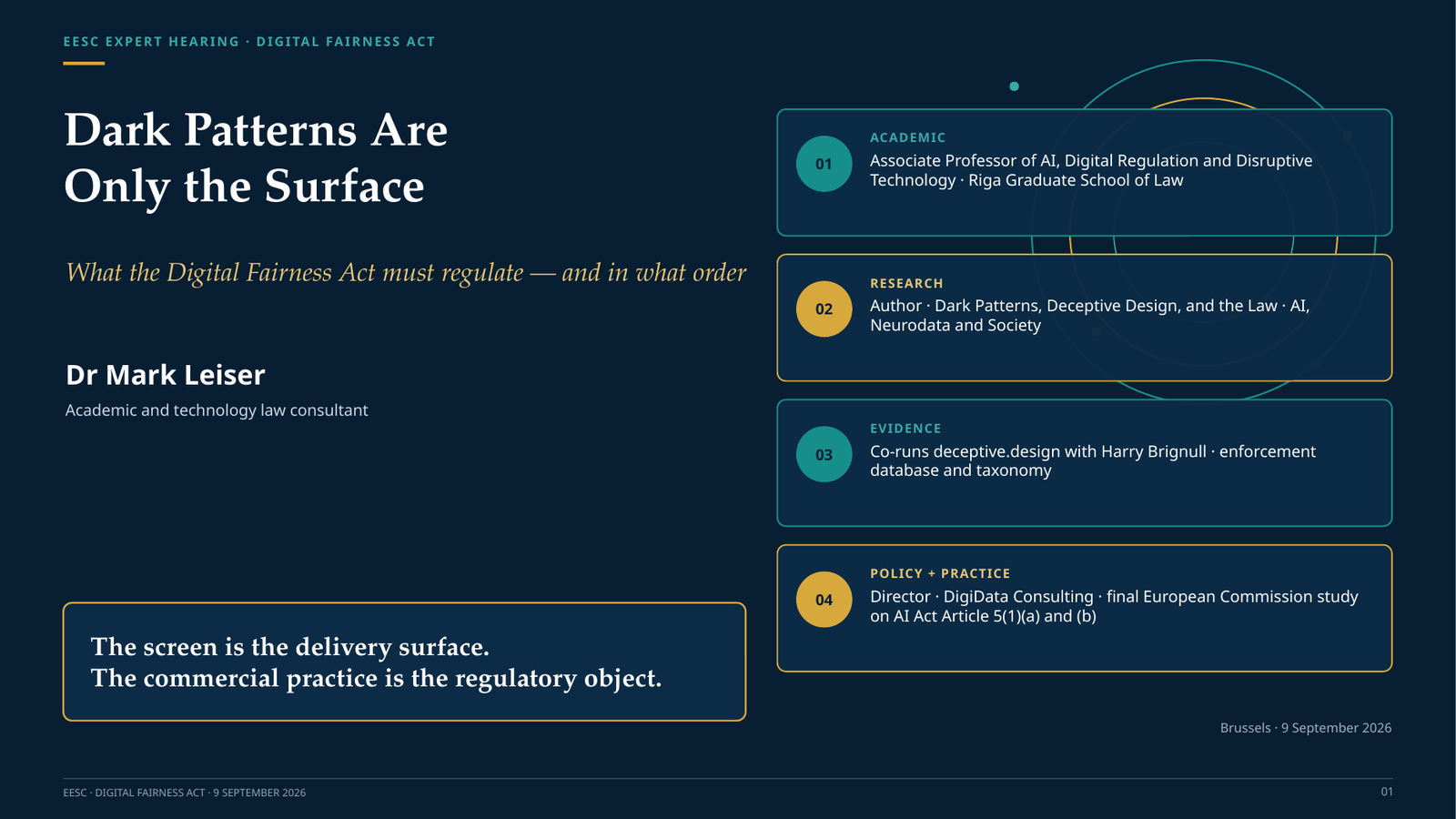
Slides, prepared remarks and a companion lecture from the European Economic and Social Committee hearing on the Digital Fairness Act, commercial practices and the evidence needed for enforcement.
Mark Leiser examines consent and the pace of live shopping auctions in the newspaper’s investigation of Whatnot.
Digital regulation rarely arrives as one clean legal question. DigiData connects doctrine, evidence, institutional incentives, system design and the consequences of implementation.
Strategic legal and policy analysis where overlapping digital rules, supervisory discretion and institutional design determine what can be built, shared or scaled.
Research and communication designed for decision-makers who need a position that can survive legal, political, technical and public scrutiny.
Practical interpretation of the AI Act and adjacent regimes, focused on system architecture, actual use, affected people and defensible routes to deployment.
Actor-specific identifiability, anonymisation evidence, data-access architecture and assurance methods that preserve legal status without destroying lawful utility.
Analysis that connects interface design, system architecture, personalisation, market power and the combined operation of consumer, data and platform law.
Rights-based regulatory design for services and systems affecting children, with attention to evidence, proportionality, education and the limits of techno-solutionism.
DigiData assembles purpose-built teams from a trusted international network of legal scholars, regulatory specialists, technologists, economists, behavioural researchers, designers, child-rights experts and sector specialists. Each team is configured around the problem rather than a permanent consultancy hierarchy.
DigiData defines the analytical architecture, selects and coordinates the necessary expertise, and retains responsibility for the coherence, quality and delivery of the work.
Identify the legal, technical, behavioural and institutional questions that need separate treatment.
Bring in specialists only where their contribution improves the analysis or the credibility of the output.
Produce one coherent position rather than a bundle of disconnected expert views.
The examples distinguish commissioned work, research partnerships, public submissions and earlier academic work completed in a personal capacity. They are not presented as a uniform client list.

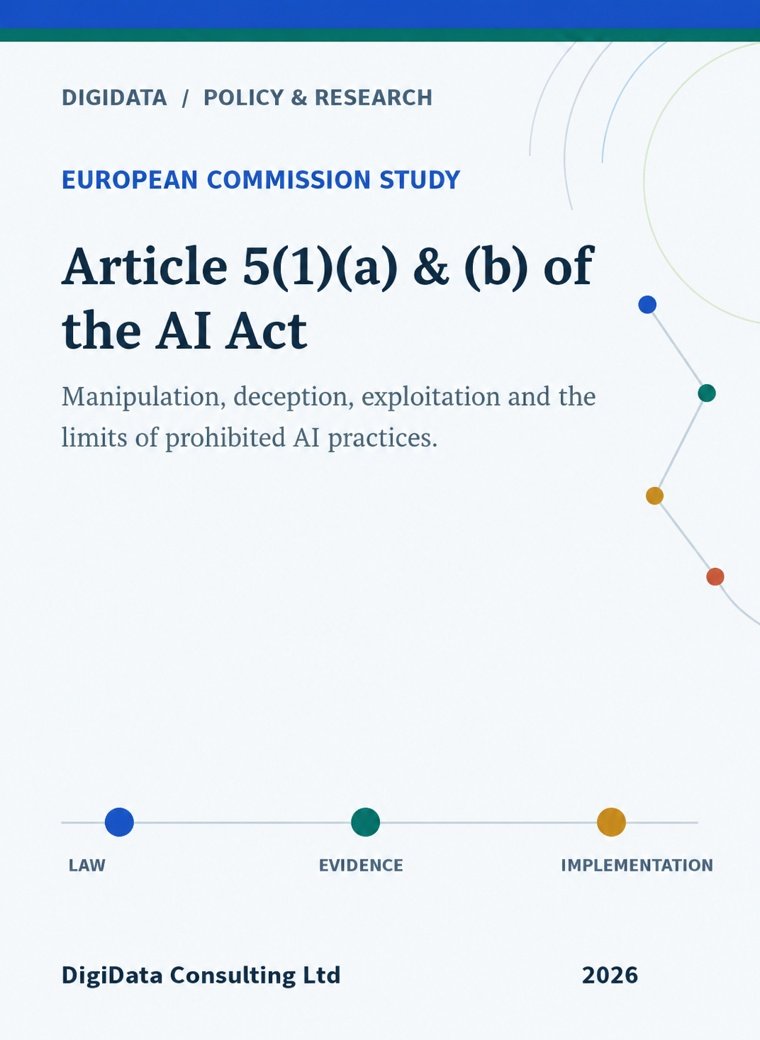
A final study report combining legal interpretation, stakeholder input, practical use cases, enforcement analysis and cross-regulatory mapping for Article 5(1)(a) and (b) of the AI Act.
Contribution: A public Commission study designed to improve legal clarity, support harmonised application and strengthen practical enforcement.

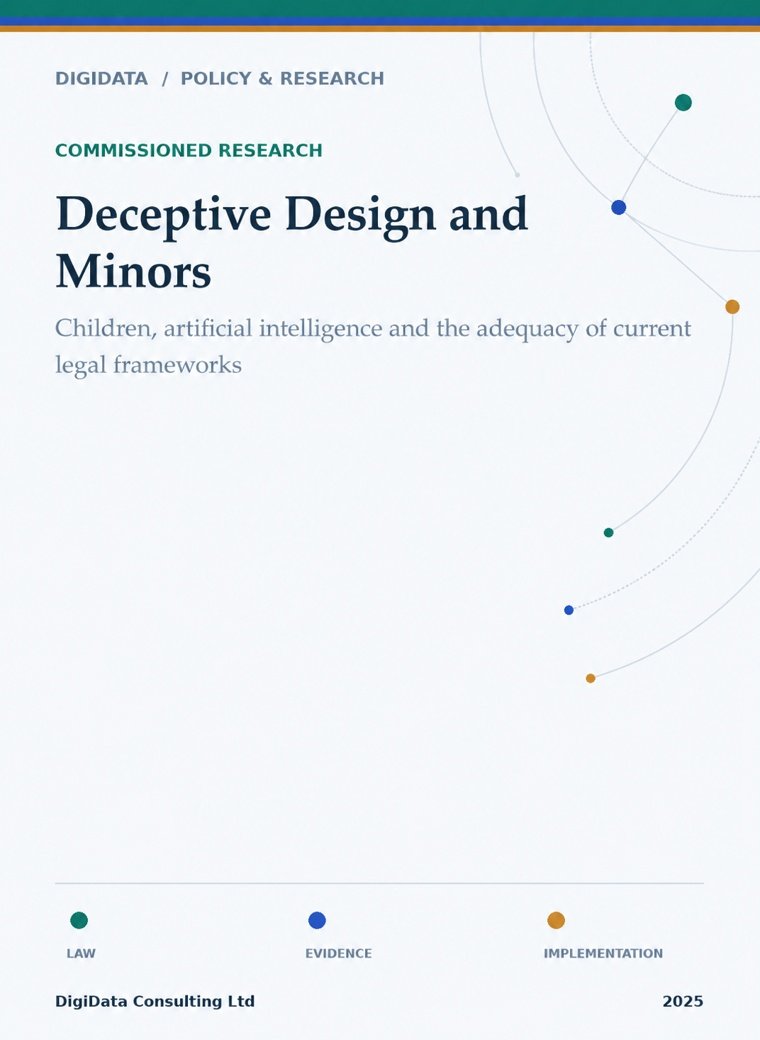
A comparative legal and policy study of interface tactics, system-level manipulation, personalisation, gamification and commercial exploitation affecting minors.
Contribution: Child-centred proposals on design standards, algorithmic scrutiny, enforcement and the development of a coherent digital-fairness framework.

Use-case mapping, legal gap analysis and regulatory design addressing AI systems operating within education as a protected public function.
Contribution: The working materials remain private. The engagement demonstrates DigiData’s ability to connect rights, educational quality, lifecycle duties and institutional implementation.
The marks record different forms of commissioned work, collaboration, participation or institutional engagement. They do not imply endorsement or a continuing client relationship.







Selected organisations and collaborations reflect different forms of commissioned work, participation, research, advisory activity or institutional engagement. Display does not imply endorsement, a current client relationship or agreement with every DigiData position.
Public studies, submissions and policy papers show how DigiData works: starting with difficult legal boundaries and ending with concrete institutional or operational choices.
 Published
A comprehensive analysis of subliminal, purposefully manipulative, deceptive and vulnerability-exploitative AI practices, including constitutive elements, enforcement challenges, use cases and interaction with the wider EU digital acquis.
 Published
A 155-page analysis of manipulative interfaces and system architecture, personalised influence, gamification, children’s vulnerabilities and the adequacy of the GDPR, DSA, UCPD and AI Act.
 Published
A submission on Article 6(11) DMA that preserves anonymisation as the legal condition for sharing personal search data, proposes tiered access modalities and introduces the AUIA.
 Published
A proposal for a binding duty of evidence and public reason-giving when digital regulators choose among materially different lawful routes affecting rights, legal certainty, investment and scale.
 Published
An analysis of collective redress, Article 82 GDPR, procedural fragmentation, forum selection, automation and the need to keep harm, procedure and remedy tightly coupled.
 Published
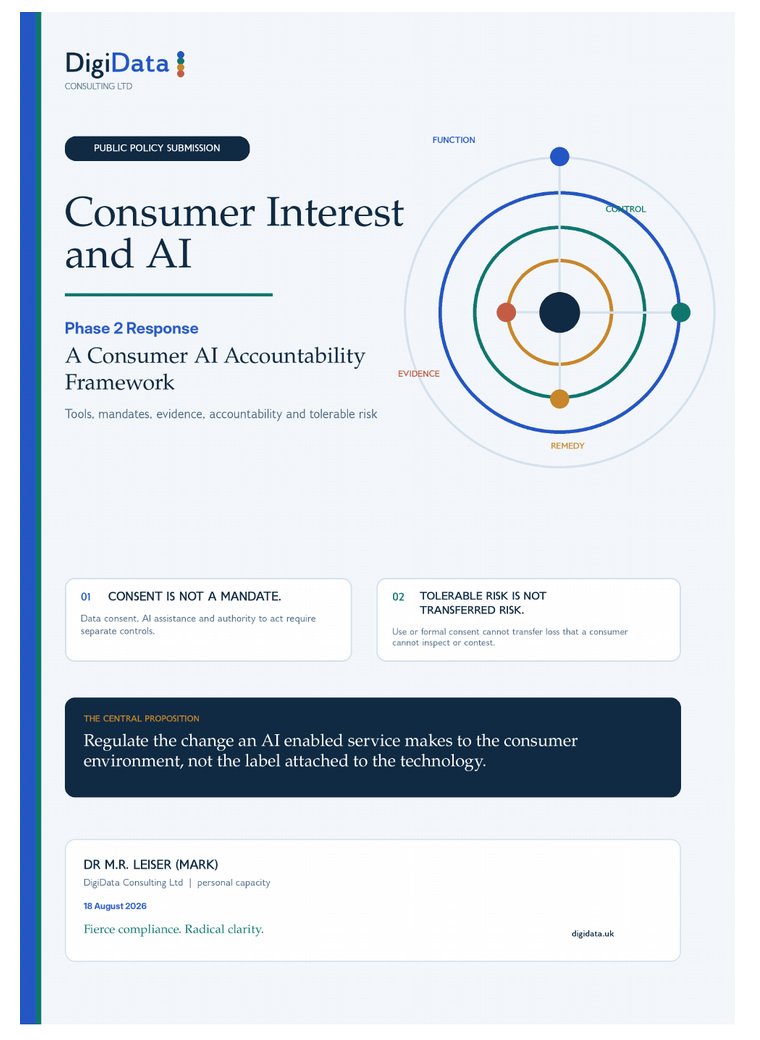
An operational framework for adaptive and agentic consumer services, combining a five-tier functional risk ladder with mandates, action receipts, prohibited optimisation objectives, vulnerability-event controls, rights-friction parity, evidence packs, redress by design and earned safe harbours.
TRACE and the AUIA are being developed as complementary components of a documentation stack for contextual data-status claims. The public website presents the concepts, not the tools.
A concise, portable record of what an assessed data-status claim covers, for whom it applies, how the artefact may circulate and when reassessment is required.
A structured evidence dossier for testing contextual anonymity first, retained utility second, and the access route and controls proportionate to any residual risk.
The Blog brings together short notes, working observations and selected longer research essays, with clear links to the wider LawBhoy archive.
The EDPB has supplied an analytical map for anonymisation; the legislature must create the assurance system that makes it usable.
Read on SubstackThe EDPB has improved the legal test, but organisations still need a reusable route to contextual anonymisation.
Read on SubstackThe EDPB’s new guidelines complicate the Commission’s Article 6(11) DMA playbook.
Read on SubstackFive lectures examine the object of regulation, material distortion, relational vulnerability, evidence and enforcement.
Tell DigiData what decision, dispute or policy problem you need to resolve. The initial enquiry form is designed to establish scope, urgency and the expertise the work may require.